The Labyrinth of Light and Time: A Journey to the Edges of Understanding

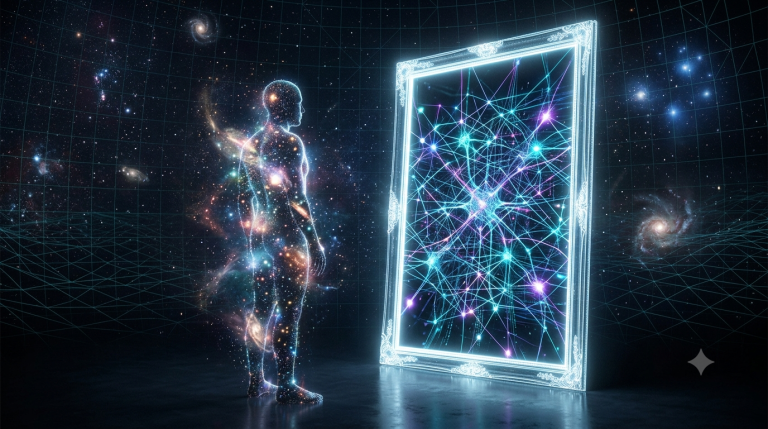
There’s an unquenchable fire in the human spirit, a relentless curiosity that drives us to peer into the deepest cosmic abysses and the most intricate workings of reality. We grapple with questions that seem to teeter on the very edge of sanity, from the birth of light to the echoes of ancient gods and the tantalizing, perhaps forbidden, pathways of time. This is not just an exploration of facts, but a journey into the heart of mystery itself – a quest to “figure it all out,” even when the “all” seems infinitely vast.
Part 1: Dancing with Light – The Ethereal Tether of Reality
Light, the universe’s swift messenger, seems so fundamental, so constant. Yet, even light can be coaxed into extraordinary behaviors that challenge our everyday intuition.
- Capturing the Untamable: The Quest to “Freeze” and “Hold” Light
Imagine holding a sunbeam in your hand. While we can’t quite “freeze” light into a solid sculpture, scientists have achieved something almost as magical: bringing light to a screeching halt. This isn’t the stuff of fantasy; it’s a reality in laboratories using exotic states of matter like Bose-Einstein Condensates (super-cooled clouds of atoms behaving as one quantum entity) or specialized crystals. Through techniques like electromagnetically induced transparency, researchers can make an opaque medium transparent to light of a specific frequency, dramatically slowing the light pulse as it enters. The information carried by the light – its very essence – becomes imprinted onto the atoms. For precious moments, even up to a minute in some experiments, the light is “stored,” its journey paused before it’s released to continue on its way. This isn’t light turning to ice, but rather a profound interaction where light’s energy and information are temporarily handed off, offering tantalizing possibilities for quantum computing and ultra-secure communication. - Echoes in Reverse: Can Light Retrace Its Ghostly Steps?
If stopping light wasn’t astonishing enough, consider forcing it to travel backward, to retrace its exact path as if a cosmic film were playing in reverse. This isn’t about defying the arrow of time itself, but about manipulating light waves with incredible precision. The key lies in optical phase conjugation. Imagine a perfectly jumbled wavefront, perhaps after light has passed through a distorting medium like frosted glass. A “phase-conjugate mirror,” unlike an ordinary mirror, doesn’t just reflect the light; it effectively “time-reverses” the wavefront. Every twist, every turn, every scattering event the light experienced on its forward journey is precisely undone on its return. The light, as if possessing a perfect memory, navigates the complex path backward, emerging as a clear, focused beam. This “healing” property of phase-conjugated light has profound implications for atmospheric correction in telescopes, medical imaging through opaque tissues, and precise energy delivery.
Part 2: Whispers of Genesis – From Cosmic Dawn to Ancient Records
The origin of everything – the universe, its laws, its light – remains humanity’s most persistent enigma, echoing in both our scientific inquiries and our oldest spiritual narratives. - The Moment of Illumination: “Let There Be Light” Across Science and Scripture
“And God said, ‘Let there be light,’ and there was light.” This powerful declaration from the Book of Genesis (1:3) has resonated through millennia, symbolizing creation, order, and divine power. From a theological standpoint, it’s a foundational truth about the origin of existence, where light is not just a physical phenomenon but also a metaphor for wisdom, goodness, and the divine presence. While the authorship of Genesis is a complex tapestry woven by human hands over centuries, for believers, its core message often carries the weight of divine inspiration.
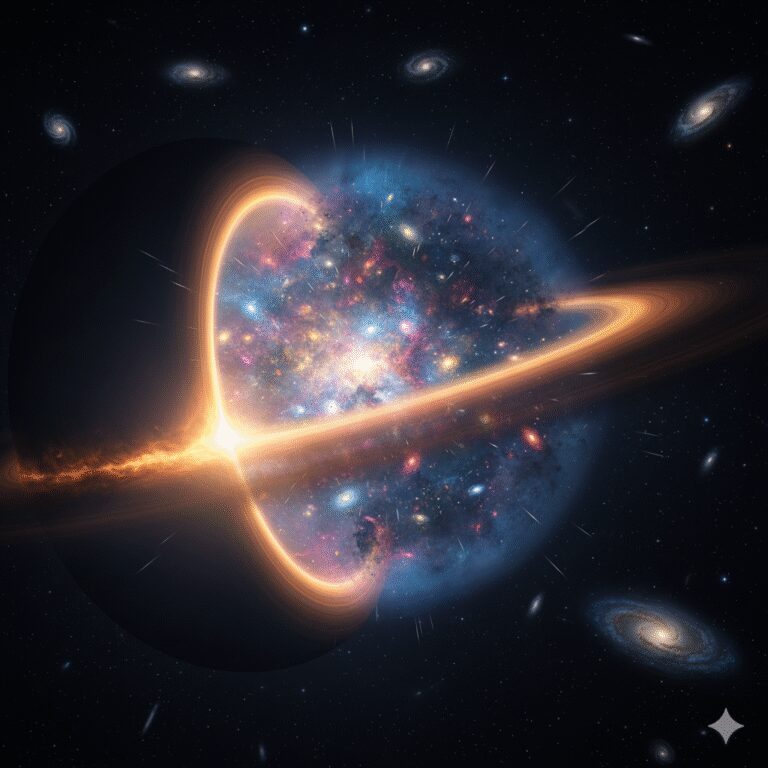
Intriguingly, modern cosmology tells its own story of a universe dawning in light. For roughly 380,000 years after the Big Bang, the universe was a seething, opaque inferno, a particle soup so hot that light photons couldn’t travel freely without being scattered. Then, as the cosmos expanded and cooled, electrons and protons combined to form neutral atoms. This event, known as recombination, suddenly made the universe transparent. The “first light” that was finally free to stream across the cosmos is what we detect today as the faint, pervasive glow of the Cosmic Microwave Background (CMB). While the poetic narrative of Genesis and the mathematical models of science speak different languages and operate on different timescales (light before the Sun in Genesis, for example), both point to a profound moment when darkness gave way to illumination. - Before the Bang, Beyond the Known: The Enigma of Universal Origin
The statement “matter cannot be created or destroyed” is a cornerstone of physics, the law of conservation of energy. This logically leads to the profound question: if nothing can be truly created, where did all the “stuff” of our vast universe originate? We had to come from something, didn’t we?
The Big Bang theory describes the universe’s explosive expansion from an infinitely dense, unimaginably hot point – a singularity. But the laws of physics as we currently understand them break down at this singularity; they cannot describe the moment of creation itself or what, if anything, preceded it. Was there a “before”? Is the concept even meaningful without time and space as we know them?
Some theories attempt to reconcile this. One captivating idea is that the total energy of the universe might actually be zero. The immense positive energy bound up in matter and radiation could be perfectly counterbalanced by the negative energy inherent in the gravitational field that permeates the cosmos. If this is true, the universe could have sprung from a state of zero net energy – a “free lunch” on a cosmic scale – without violating the overarching conservation laws. Another avenue explores quantum fluctuations, where, in the bizarre rules of the quantum realm, energy and particles can briefly flicker into existence from an apparent vacuum. Could our entire universe be the result of such a fluctuation on an unimaginable scale? These are frontiers where physics blurs with philosophy. - Beyond Our Veil: Dreaming of Multiverses
Could our universe, with all its galaxies and wonders, be just one among many – a single bubble in an infinite cosmic ocean? This is the startling proposition of multiverse theories. These aren’t just whimsical fancies; they emerge from some of our most advanced physics, including string theory and models of eternal cosmic inflation. - Inflationary Multiverse: The theory of cosmic inflation, which posits an exponential expansion in the universe’s first fraction of a second, suggests that different regions of space could have stopped inflating at different times, budding off into separate “bubble universes,” each potentially with its own unique physical laws and constants.
- String Theory’s Landscape: String theory, which imagines fundamental particles as tiny vibrating strings in higher dimensions, predicts a vast “landscape” of possible vacuum states, each corresponding to a different universe with different properties.
- Tegmark’s Levels: Physicist Max Tegmark has classified multiverses into different levels, from an infinite expanse beyond our observable horizon (Level I) to universes governed by different mathematical structures (Level IV).
The challenge? Proving any of this. If other universes are truly separate, they may be forever beyond our observational reach, making the multiverse concept potentially unfalsifiable – a major hurdle for any scientific theory. Yet, the mathematical elegance and explanatory power of these ideas keep them at the forefront of theoretical cosmology, pushing the boundaries of what we dare to imagine.
Part 3: Footprints in Time – Humanity’s First Stories and Eternal Beliefs
As consciousness dawned, humans began to leave their mark, recording not just their existence but their understanding of the world and the divine forces they perceived. - Etched in Stone and Clay: The Dawn of Recorded History
When did humanity first chisel a specific “event” into the stone of permanence, moving beyond simple tallies to narrate a moment in time? While the absolute “first” is lost to us, a monumental candidate is the Narmer Palette, dating back to circa 3100 BCE in ancient Egypt. This ceremonial slate, carved with intricate detail, isn’t just art; it’s a historical document. It depicts King Narmer, his name etched in early hieroglyphs, wearing the crowns of both Upper and Lower Egypt, decisively smiting his enemies. It’s a vivid portrayal of a pivotal political event: the unification of the two lands.
Contemporaneously, in Mesopotamia, the Sumerians were pressing cuneiform script into clay tablets. Many of these earliest tablets were administrative – meticulous records of grain, livestock, and labor. But even these lists chronicle the “events” of daily life and governance. Over time, these records grew to include royal inscriptions, temple dedications, and eventually, epic poems and law codes, painting a rich picture of a world awakening to self-documentation. These first records mark a profound shift in human consciousness – the ability to transmit specific knowledge and narrative across generations. - In Search of the First Divine: Primordial Gods of Egypt and Sumer
The humans who etched these first records lived in a world imbued with the divine. They didn’t ask “Does God exist?” but rather “Which gods are active here, and how do we honor them?” Theirs was a polytheistic world, teeming with deities who embodied the forces of nature, the cycles of life, and the fates of kingdoms. - In ancient Egypt, the pantheon was vast. Ra, the sun god, sailed his barque across the sky daily. Osiris ruled the underworld, offering the promise of rebirth. Isis, his devoted wife, wielded magic and motherhood. Horus, the falcon-headed god, embodied kingship. The very land was divine, and the Pharaoh was often seen as a god incarnate or a chosen intermediary.
- In Sumer, each city-state revered its patron deity, alongside a broader pantheon. An (Anu) was the distant sky father, Enlil the powerful god of wind and storm, Enki (Ea) the cunning god of waters and wisdom, and Inanna (Ishtar) the formidable goddess of love, fertility, and war. These gods were not remote; they were believed to intervene directly in human affairs, their moods and actions shaping destiny.
When we ask “Who was the very first god?”, we must look to these cultures’ creation myths. They often speak not of a single “first,” but of primordial beings or initial divine pairs. - Sumerian myths tell of Nammu, the primordial watery abyss, who birthed An (sky) and Ki (earth).
- Egyptian cosmology describes Nu (Nun), the chaotic, boundless primeval waters that existed before creation. From Nu emerged Atum, the self-created one, who then brought forth other gods. In another tradition, Ptah of Memphis conceived the world in his heart and brought it into being with his spoken word.
These “first gods” are often the raw elements of the cosmos, the undifferentiated potential from which an ordered world, and subsequent generations of deities, emerged. They represent humanity’s earliest recorded attempts to answer: “From what divine source did all things begin?”
Part 4: Bending Yesterday and Tomorrow – The Paradox of Time Travel
Of all humanity’s speculative dreams, time travel remains one of the most alluring and philosophically treacherous. Can we truly break the seemingly linear flow of time? - The Arrow and the Loop: Journeys into the Future and the Labyrinth of the Past
Traveling into the future is, surprisingly, a scientifically established phenomenon, a consequence of Einstein’s theories of relativity. Time dilation dictates that time passes differently for observers in different frames of reference. An astronaut speeding through space at near light-speed, or even someone living closer to a strong gravitational source, will experience time passing slower than someone stationary or further from gravity. They are, in effect, traveling into the future of their slower-moving counterparts. This isn’t just theory; it’s confirmed by experiments with atomic clocks and is a necessary correction for GPS satellites.
Venturing into the past, however, is a vastly different proposition, relegated to the realm of extreme theoretical physics and fraught with conceptual pitfalls. - Wormholes (Einstein-Rosen Bridges): These are theoretical “tunnels” through spacetime, shortcuts that could potentially connect distant points in space or even different times. But stabilizing a traversable wormhole would likely require exotic matter – substances with bizarre properties like negative mass-energy density, which has never been observed and may not exist.
- Tipler Cylinders: Physicist Frank Tipler proposed that an infinitely long, immensely dense cylinder spinning at nearly the speed of light could warp spacetime so severely that it creates “closed timelike curves,” allowing paths back into one’s own past. The infinite length and unimaginable densities make this a highly improbable scenario.
- Guardians of Timelines? Paradoxes and Cosmic Censorship
The mere thought of past travel conjures a host of paradoxes. The most famous is the Grandfather Paradox: if you travel to the past and prevent your grandfather from meeting your grandmother, you would never have been born to make the journey in the first place. So who made the change?
Physicists and philosophers have pondered solutions: - Novikov Self-Consistency Principle: This suggests that any actions taken by a time traveler in the past were always part of history. You cannot change the past because your presence and actions are already woven into the fabric of events that led to the future you came from. The probability of an event that would create a paradox is zero.
- Many-Worlds Interpretation (of Quantum Mechanics): Perhaps changing the past isn’t possible in your original timeline. Instead, your actions might cause you to branch off into a new, parallel universe, leaving your original timeline unaltered.
- Chronology Protection Conjecture: The late Stephen Hawking proposed that the laws of physics themselves might conspire to prevent time travel on macroscopic scales, perhaps through effects of quantum gravity that we don’t yet understand. Nature, he speculated, might have a form of “cosmic censorship” to protect the integrity of the timeline.
Epilogue: The Unfolding Scroll
Our journey through these colossal questions – from the behavior of light to the birth of universes, from the first human records to the tantalizing paradoxes of time – reveals more than just the limits of our current knowledge. It illuminates the boundless nature of human curiosity itself. We are driven by an innate need to explore, to understand, to “figure it all out,” even when the “all” stretches into infinities and touches upon the ineffable.
While definitive answers to many of these enigmas may lie far beyond our present grasp, perhaps hidden in equations yet unwritten or technologies yet undreamed, the quest itself is a testament to our unique place in the cosmos. We are the universe attempting to understand itself. And in that persistent, sometimes maddening, always wondrous pursuit, we find not just the challenges of the unknown, but the profound beauty of the unfolding scroll of discovery. The greatest adventure is not just in finding answers, but in daring to ask the questions.